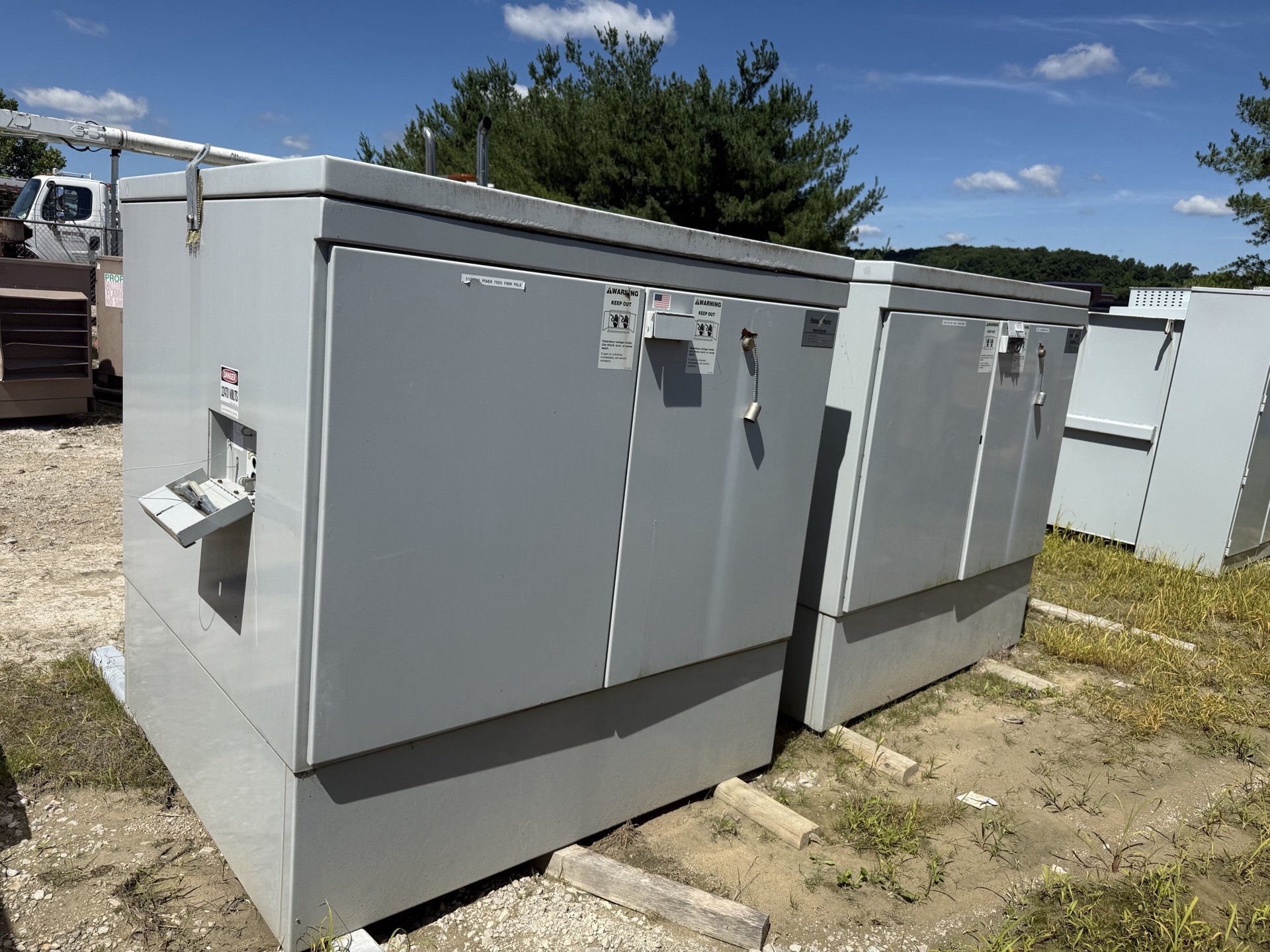
Why Breaker-Compartment Records Matter
When metal-clad switchgear is being reviewed for purchase, the breaker compartments help establish what equipment is present and how its parts are arranged. A lineup may include several sections, and the breakers associated with those sections may differ in type or configuration. A clear inventory gives a buyer a more useful basis for review than a broad description such as “switchgear” alone.
Compartment labels, breaker identification, shutter arrangements, and section drawings each offer clues, but none should be treated as a substitute for the equipment’s actual documentation. Labels can be incomplete, drawings may not reflect later changes, and equipment can have been modified during its service life. Classification and configuration must be confirmed from the records available for the specific gear.
Build an Inventory from Existing Information
Start with records the facility already has, such as lineup schedules, section drawings, breaker schedules, equipment lists, or prior project documents. Record the identifiers shown for each section and compartment, along with any breaker labels that can be matched to those positions. Note which details come from a drawing, which come from a visible label, and which remain uncertain. That distinction helps prevent an assumption from becoming an inaccurate description.
Where documentation is missing or appears inconsistent, describe the gap rather than filling it with a guess. For example, a compartment may be labeled while its corresponding breaker is not clearly identified in the records. A drawing may show a lineup arrangement that differs from visible section labels. These discrepancies are useful to disclose during review because they can affect how the equipment is identified and evaluated.
Read Exterior Nameplates from Safe Locations
Exterior nameplates and labels can provide important identification details without requiring access to internal compartments. If they are visible from a safe location under site rules, record the wording as shown or provide a clear image. Do not approach equipment, remove covers, or enter restricted areas to obtain a detail. If a plate is obscured, inaccessible, or unreadable, mark that information as unavailable rather than trying to retrieve it.
For a buyer’s initial review, useful information may include the maker and type designation, lineup or section identifiers, and other details actually stated on the equipment or in its records. Do not infer a rating, breaker family, or compatibility from appearance alone. The available documentation should support any such classification, and uncertainties can be clarified before an offer is considered.
What Drawout Breakers and Shutters Can Tell You
Drawout breakers are associated with compartments designed to accommodate their movement between positions, while shutters are part of the compartment arrangement. Their visible presence or description in records can help explain how the lineup is organized. However, a visual observation does not establish the breaker’s condition, operating status, interchangeability, or suitability for a particular application. Those conclusions require information beyond appearance and should not be assumed during a preliminary inventory.
Describe what is documented or visible without operating the equipment or opening compartments. If records identify a breaker by compartment, note that relationship. If the paperwork lists a breaker but does not clearly connect it to a section, say so. Clear, qualified descriptions are more helpful than confident but unsupported claims, especially when a lineup includes mixed or incomplete records.
Use Section Drawings Carefully
Section drawings can help a buyer understand the lineup’s stated sequence and the relationship between sections and breaker compartments. They may also help reconcile labels across a long lineup. Compare drawing identifiers with exterior labels only when those labels can be viewed safely. Note the drawing date or revision if it appears on the document, but do not assume that an older drawing is current or that it captures every field change.
When drawings and equipment labels disagree, preserve both pieces of information in the description and flag the mismatch for review. A buyer can then assess the discrepancy alongside the other records instead of relying on an unverified interpretation. Classification must be confirmed from the actual documentation for the equipment under consideration; a general resemblance to another lineup is not enough.
Information That Helps an Offer
A practical submission can include the equipment location in New York, an approximate section count if known, available breaker and compartment schedules, section drawings, and safe exterior nameplate information. Identify missing records and any known changes or removals. If the lineup came from a decommissioned data center or shut-down power plant, that context can help explain the project, but it does not by itself determine whether every item can be purchased.
We buy used, surplus, and decommissioned electrical equipment, including metal-clad switchgear, and consider all voltage classes. We do not require the seller to test equipment. Any purchase remains subject to review; no individual item or project is guaranteed acceptance. Once the available details have been reviewed, an offer can be considered for the equipment described.
Coordinate Removal Around Site Requirements
Plan removal as a separate project step, not as an instruction for facility staff to prepare the gear. The seller should not disconnect, dismantle, move, or arrange freight for equipment on our behalf. We handle rigging and logistics, including crane, rigging, disconnects, loading, freight, and hauling. Qualified personnel perform isolation and physical handling in accordance with site rules.
To coordinate, share the site’s scheduling constraints, access requirements, and applicable procedures, along with the status of the documentation review. The right sequence depends on the facility and the equipment; details should be confirmed with the people responsible for the site and qualified removal personnel. We make cash offers and pay upfront, subject to review and agreement. That lets the seller focus on records, approvals, and scheduling while the handling and transport plan is coordinated for the specific project.