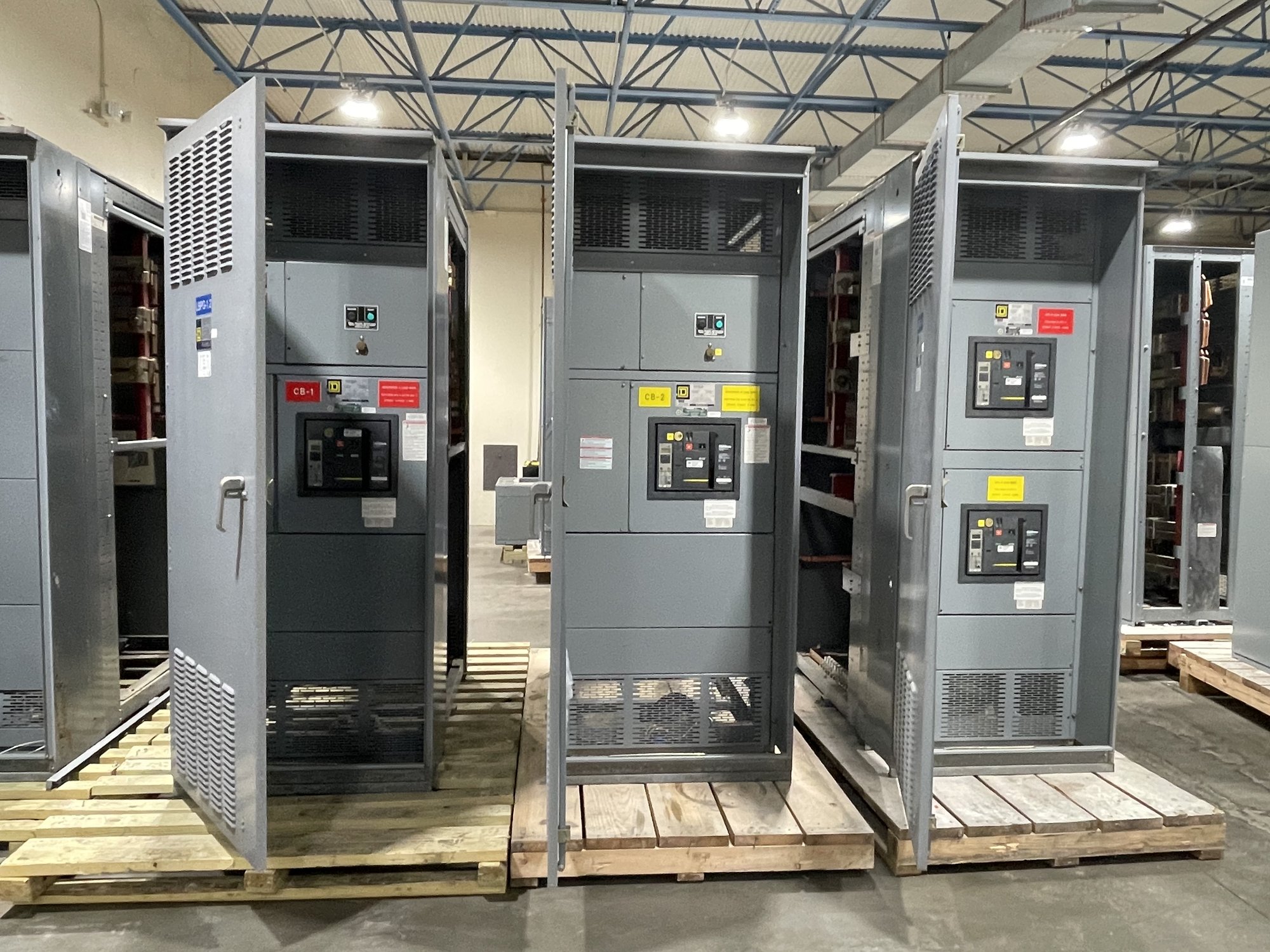
A practical way to sell electrical equipment
If you have used, surplus, or decommissioned Eaton Motor Control Centers (MCC) in New York, we are interested in reviewing it for purchase. We buy electrical distribution equipment; this is a buyer service, not a listing of equipment for sale. A useful inquiry can start with a few safe photographs and whatever identification is already available. Whether the material is a single item or a larger lineup, describe what you have and when it may be available.
We buy electrical switchgear from decommissioned data centers and shut-down power plants, along with other surplus distribution equipment. For equipment we agree to buy, we handle and cover the crane, rigging, disconnects, loading, freight, and hauling. You do not need to arrange or perform that physical work: you get paid and our team handles removal and logistics. Qualified personnel follow site isolation and safety rules, and no seller testing is required.
Identify the equipment and the lot
Motor control centers are easier to assess when the lineup and its individual buckets are described together. Note the approximate number of vertical sections, the main rating if visible, and whether buckets, starters, doors, and bus are present. A bucket schedule or existing drawing is useful, but it is not a requirement to request an offer. List any loose sections separately so the proposed lot is clear.
The Eaton nameplate is a helpful starting point, but the series, ratings, and actual components matter when describing the lot. If you have several models, identify and count them separately where practical. Existing drawings or maintenance records can provide additional context without a new inspection. We purchase equipment independently and do not represent or speak for the manufacturer.
Details that help us review an inquiry
A nameplate can answer several basic questions at once, so a clear image of an accessible label is useful. Also send an overall view, the number of cabinets or individual items, and the approximate dimensions if available. For multiple pieces, distinguish main assemblies from loose devices and identify any items that are not part of the sale. Tell us what you know; there is no need to guess at an unreadable rating.
Describe condition without additional testing
Surplus does not necessarily mean unused, and decommissioned does not by itself establish the condition of an item. Describe the equipment's known history, visible damage, and missing pieces without making assumptions. If earlier inspection or maintenance records exist, you may share them; creating a new report is not required. The seller does not need to test or energize equipment to obtain an initial review.
Keep electrical safety and site control first
We handle disconnection of purchased equipment, using qualified personnel who follow the owner's isolation procedures and applicable requirements. Equipment that looks inactive may still contain energized parts or stored energy, and large sections can be unstable when moved. Do not remove covers, handle conductors, or perform a demonstration for us. We need only information you can gather safely, and we do not require seller testing to review a potential purchase.
How an offer is considered
An offer reflects the identifiable equipment, quantity, configuration, condition, and practical cost of handling the proposed lot. Current demand and the information available at the time of review can also matter. Nameplate voltage or a familiar manufacturer alone does not establish a price, and not every lot will be suitable for purchase. We review low-, medium-, and high-voltage equipment, so tell us the actual ratings if known.
We handle rigging and logistics
We handle and cover all rigging and logistics for the equipment we agree to buy: crane, disconnects, rigging, loading, freight, and hauling. There is no need for the seller to disconnect, lift, stage, or load the lot. Describe where the equipment is located and share any known access restrictions, site rules, appointment requirements, dimensions, or weights. Our qualified personnel coordinate safe isolation and disconnection under the site's procedures.
Cash offer and payment upfront
If the equipment is a fit, we can make a cash offer for the agreed lot. Payment is upfront, before collection, on the accepted terms. Confirm the amount, payment method, included items, and collection arrangements before proceeding; a cash offer means payment rather than an equipment trade, not a promise of physical banknotes. Offers depend on the equipment and are not guaranteed for every inquiry.
Steps from first message to pickup
You can start with one clear message: what the equipment is, how much is available, where it is located, and when it can be released. Attach safely obtained overall and nameplate photos if possible, and identify any known missing or damaged components. If the lot is suitable, we can discuss an offer. Accepted purchases receive upfront payment, and we handle and cover disconnection, rigging, loading, freight, and hauling for the agreed equipment.
Common questions before you contact us
Do you need a perfect inventory? No. Start with what is safely available and mark uncertain details as unknown. Do we consider high-, medium-, and low-voltage equipment? Yes, although the decision to buy depends on the specific lot. Do we require a seller to test the gear? No. If there are unusual access limitations or known environmental concerns, mention them so they can be addressed before an offer and pickup plan are finalized.