Plan the Removal Before Treating Rooftop Gear as Surplus
Electrical equipment on a Nassau County roof may be a purchase candidate, but the project involves more than identifying a breaker or switchboard. Equipment weight, the structure beneath it, the route from roof to ground, building approvals, and the timing of the work all affect whether removal can be considered. Start with a planning review rather than assuming that equipment can be lifted or that a buyer can accept it without assessment. No purchase is guaranteed before review.
Keep the equipment in place while gathering information. Do not open energized equipment, test it, disconnect it, dismantle it, or attempt to move it. Any site inspection or removal work must be planned with qualified personnel and follow the building’s rules and applicable site controls.
Build an Inventory from Safe, Available Information
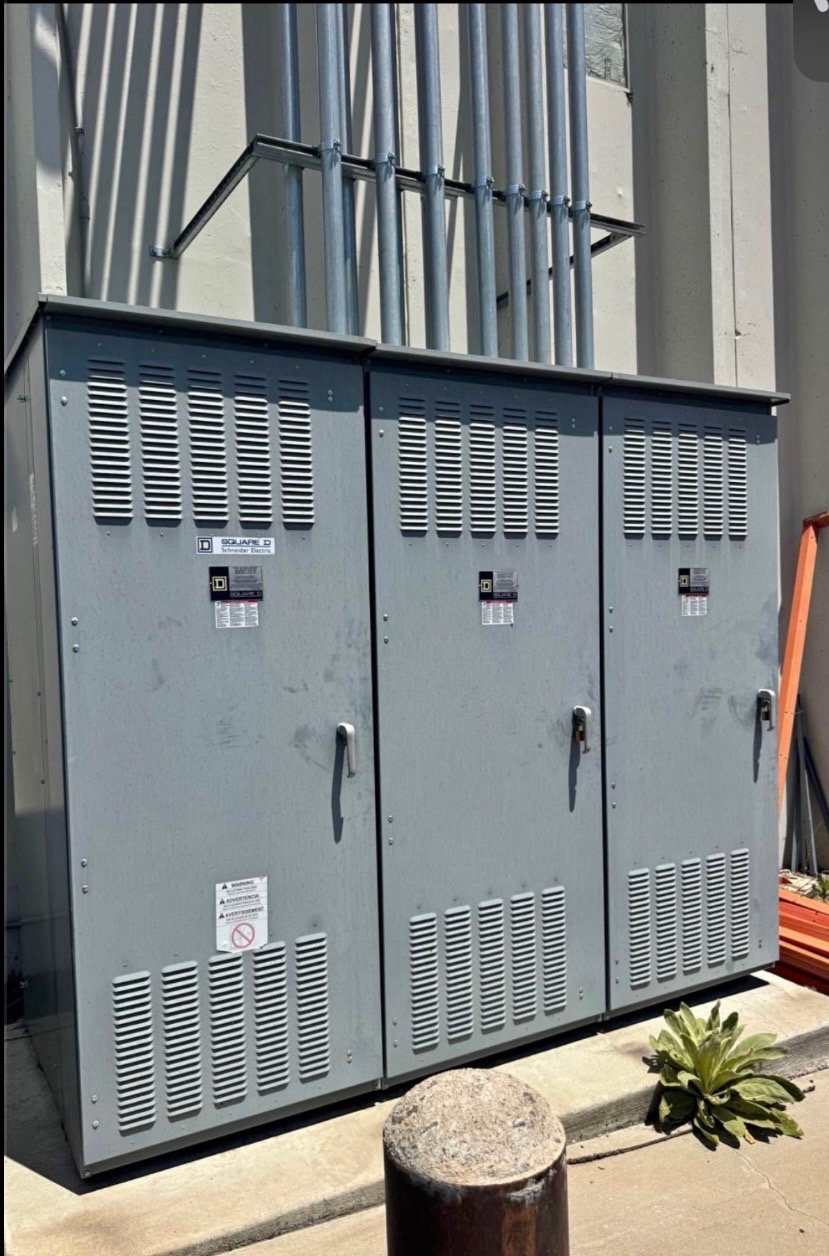
Make a preliminary inventory of each item that may be available: for example, switchgear, a switchboard, a motor control center, a panelboard, busway, breakers, or a unit substation. Record the equipment’s location on the roof, its apparent role if known, and whether it is part of a larger assembly. Note items that appear associated with one another without assuming they can be separated or removed individually.
Photographs can help show the overall arrangement, access conditions, and visible equipment labels. Take them only from a safe, permitted location; do not approach, touch, open, or lean over equipment to get a better view. If a label cannot be read safely, say so rather than guessing. An incomplete but accurate inventory is more useful than a detailed description based on assumptions.
Use Exterior Nameplates Without Creating a Safety Risk
Exterior nameplate information can help distinguish equipment and support an offer review. Where a nameplate is visible from a safe location, record the text that can be read, such as the manufacturer, catalog or model identifier, and stated ratings. These details are useful only when legible and correctly transcribed. Do not remove a cover or enter a restricted area to find a label, and do not infer missing technical information from appearance.
If equipment is still connected or its condition is uncertain, leave that assessment to the people responsible for the site and qualified personnel. The seller is not required to test equipment for a buyer. Note whether the equipment is described by site records as operating, stored, decommissioned, or unknown, and make clear when that status has not been verified.
Assess Weight, Roof Support, and the Lift Route
Rooftop gear can be difficult to handle because its weight and dimensions may be substantial, and the roof’s capacity cannot be established by looking at the equipment alone. Gather any available equipment drawings, shipping or installation records, structural information, and existing building documentation. These records may help qualified project personnel evaluate the proposed work, but they do not by themselves establish that a roof or lifting point can support a removal operation.
Map the practical route at a planning level: where equipment sits, how a qualified crew might reach it, and where a crane or other lifting arrangement could potentially be positioned. Identify known restrictions such as limited staging space, access controls, overhead obstructions, or a route that passes through occupied areas. Do not select lift points or decide a rigging method from photographs alone. The appropriate method and feasibility require project-specific review.
Confirm Building Approvals and Site Coordination
Before setting a removal date, find out who has authority to approve work on the property. Depending on the building and its rules, coordination may involve property management, the owner, facilities staff, a tenant, a structural professional, or other parties. Determine what documentation, work notices, access arrangements, and review steps the site requires. Do not assume that a buyer’s interest replaces building approval or any review the project requires.
Share known site conditions early, including roof access procedures, permitted work periods, security requirements, and restrictions on crane positioning or staging. If approvals are pending, describe them as pending. A clear account of what is confirmed and what remains unresolved helps avoid treating a tentative plan as authorization to proceed.
Provide the Details That Help Review an Offer
For an initial review, provide the inventory, safely obtained nameplate information, available photographs, approximate equipment count, and any documentation that helps identify weight or dimensions. Explain which items are surplus or decommissioned and whether they come from a shutdown or other site transition. Include the roof-access and lift constraints you already know, along with the status of building approvals. If weights, ratings, or access conditions are unknown, identify them as unknown rather than supplying estimates as facts.
The buyer reviews the information before determining whether particular equipment can be purchased. All voltage classes are considered, but that does not mean every item or project will be accepted. No seller testing is required for an offer review, and payment is upfront for a purchase that proceeds.
Coordinate Qualified Removal and Closeout
For accepted equipment, the buyer handles the removal logistics, including crane, rigging, disconnects, loading, freight, and hauling. Qualified personnel perform isolation and physical handling in accordance with site rules. The building team and buyer should coordinate the approved work window, access, and any site-specific conditions before work is scheduled; the seller should not disconnect, dismantle, lift, load, or arrange freight.
For a Nassau County rooftop project, a useful plan connects the equipment inventory to the roof and the building process: what is present, what can be identified safely, what support and access information exists, and which approvals remain. That preparation gives the buyer a clearer basis for review while keeping structural decisions, electrical work, and physical handling with the qualified people responsible for them.