Plan the Power Handover Before Listing Equipment
Decommissioning a data center is not one switch-off date. Some electrical assets may be retired early, while others remain in service to support workloads, transition activity, or equipment that has not yet moved. A sale plan should therefore follow the approved shutdown phases—not simply group equipment by type or location. For each potential sale lot, identify when it can be released without affecting remaining operations, who has authority to approve that release, and who will coordinate the handover.
Those dates and responsibilities are useful from the start of a purchase discussion. An asset may be considered surplus but still unavailable for removal until a later phase. Treating “surplus,” “approved for shutdown,” and “available for sale” as different statuses helps prevent a buyer’s review or a removal plan from getting ahead of the operational schedule.
Build an Inventory Around the Shutdown Sequence
Start with existing asset records, electrical-room schedules, one-line drawings, project decommissioning documents, and equipment labels, where available. Use those sources to connect each item to its location and its place in the planned shutdown. The records may not agree or may be incomplete; flag uncertainties rather than filling gaps with assumptions. A qualified site representative can determine which information is current and what additional review is appropriate.
For each candidate asset, record the equipment type, location, identifying details visible on its exterior nameplate, and any known relationship to a shutdown phase. Switchgear, switchboards, motor control centers, panelboards, busway, breakers, and unit substations may all appear in a data-center retirement, but their presence in an inventory does not establish that they are available or suitable for purchase. Keep equipment groups distinct when their release dates or approval paths differ.
Capture Nameplate Information From Safe Locations
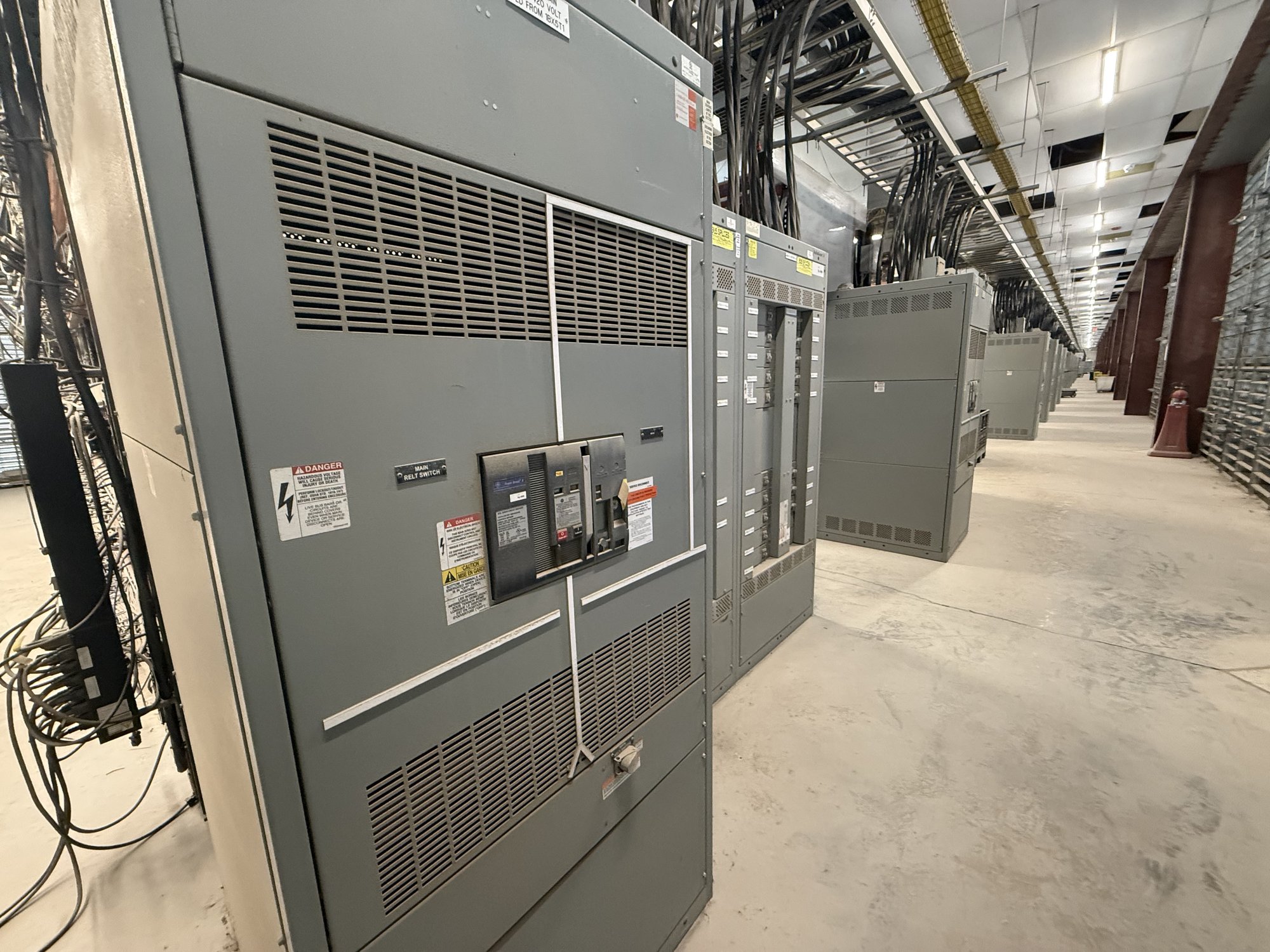
Exterior nameplates can help identify equipment for review. If a label is visible from a safe location under site rules, record or photograph the information without opening equipment or approaching energized parts. Do not enter restricted areas, remove covers, or interrupt operations to obtain a detail. If a nameplate cannot be read safely, note that it is unavailable and ask the appropriate site contact whether an approved record or later inspection can provide the missing information.
Useful offer information may include the equipment type, manufacturer and model details if legible, voltage information shown on the label, quantity, location, and known condition or completeness based on existing records. Include clear exterior photographs only when they can be taken safely and are permitted by site rules. Seller testing is not required. Do not conduct tests or make assumptions about internal condition to complete an inquiry; disclose what is known and identify what has not been verified.
Give Every Sale Lot a Release Date and Owner
Make the lot—not just the overall project—the unit of scheduling. A useful lot record states which equipment is included, where it is located, its planned release date or release window, and the person or role responsible for confirming that it is cleared for sale and removal. Add the relevant shutdown phase and any required approval or access conditions. If a date depends on another project milestone, describe that dependency instead of presenting the date as firm.
Responsibility should also be explicit. The asset owner, data-center operations team, decommissioning lead, facilities representative, and purchasing contact may have different roles. Identify who can authorize disposition, who confirms operational release, and who coordinates access with the removal team. Where responsibilities are not yet assigned, mark them as pending. This avoids confusing a preliminary inventory contact with the person authorized to approve a lot.
Coordinate Removal With Remaining Workloads
Before setting a removal window, align it with the approved shutdown sequence and the needs of workloads that remain. The site’s qualified personnel must determine when equipment is isolated and what site procedures apply. Physical handling should be planned with those personnel, including access, work boundaries, and the timing of any rigging or loading. The buyer should not ask the seller to disconnect, dismantle, lift, load, or arrange freight.
We handle the removal logistics, including crane, rigging, disconnects, loading, freight, and hauling. Qualified personnel perform isolation and physical handling in accordance with site rules. The schedule still needs coordination with the site’s authorized contacts; a logistics plan does not itself approve a shutdown, establish that equipment is safe to handle, or release an asset for removal.
Prepare the Offer Review and Handover
When requesting a review, share the lot inventory, visible nameplate details, available exterior photographs, known condition information, location, proposed release date, and responsible contact. Note any uncertainty, access constraints, or schedule dependencies. If several lots will become available in different phases, submit them as separate groups so their timing and review can be considered individually.
We buy used, surplus, and decommissioned electrical equipment, including equipment from decommissioned data centers and shut-down power plants, across all voltage classes. We provide cash offers and payment upfront, and seller testing is not required. Equipment must be reviewed before purchase; no item or project is guaranteed acceptance. A phased inventory with clear release dates and decision-makers gives the review and eventual handover a practical basis while helping protect power needed for work that is still ongoing.