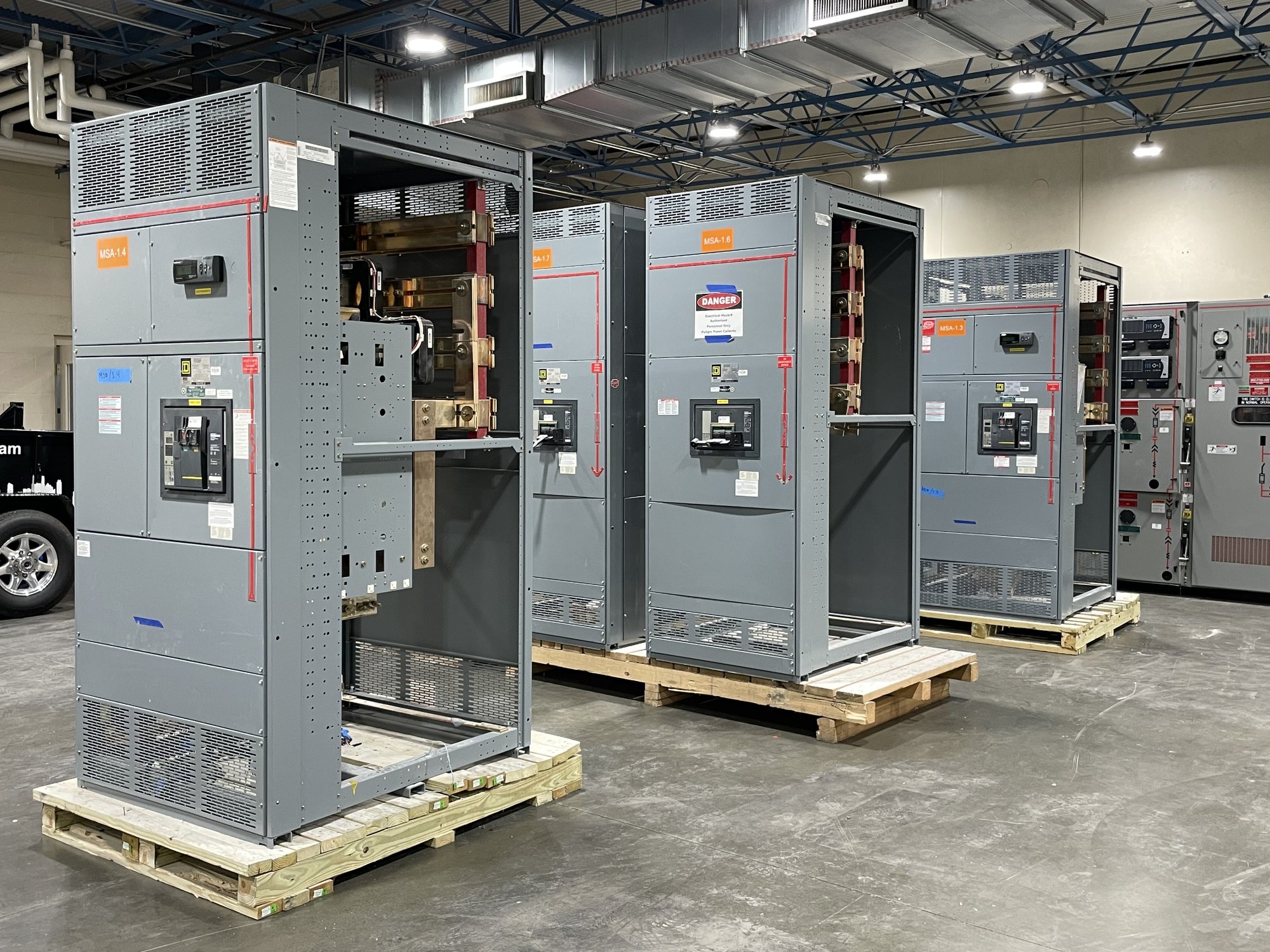
A practical way to sell electrical equipment
Retired Motor Control Centers (MCC) in Watertown does not have to remain in storage while you work out every detail of its history. We review used and surplus electrical equipment for purchase, including decommissioned assemblies and appropriate related components. The starting point is a description of the actual lot, not a promise that a particular unit will qualify. Share existing labels and photographs, and tell us what is included and where the equipment is located.
We buy electrical switchgear from decommissioned data centers and shut-down power plants, along with other surplus distribution equipment. For equipment we agree to buy, we handle and cover the crane, rigging, disconnects, loading, freight, and hauling. You do not need to arrange or perform that physical work: you get paid and our team handles removal and logistics. Qualified personnel follow site isolation and safety rules, and no seller testing is required.
Identify the equipment and the lot
MCCs may be offered as complete lineups, selected sections, or separately stored buckets. Explain which items are included and whether the doors, starters, internal bus, and main disconnect are present. If available, share the lineup's voltage and main amperage as well as any identification on individual buckets. We review the lot as described rather than assuming every section has the same components.
For a collection in Watertown, describe the equipment's actual pickup point, not just the project name. Tell us whether it is inside a building, at a loading dock, or in an outdoor staging area, and provide the anticipated release date. Local access and site rules vary by property; the information you supply lets us discuss a realistic plan without assuming anything about your facility.
Details that help us review an inquiry
An effective first message gives us a rough inventory: equipment type, quantity, manufacturer, model, nameplate voltage and amperage, and the location of the lot. Add a wide photograph and readable views of accessible labels where possible. Mention whether the gear is intact, divided into sections, or already staged for pickup. Approximate measurements and any existing equipment schedules can help, but missing information does not prevent you from starting a conversation.
Describe condition without additional testing
You do not have to establish that a piece of gear is operational before contacting us. Identify obvious issues such as a damaged enclosure, removed breaker, missing label, or separately stored components, and distinguish what you know from what you do not. We may ask follow-up questions about the lot, but we do not require the seller to perform electrical testing or start up equipment for our review.
Keep electrical safety and site control first
Safety takes priority over a faster quote. We handle disconnection and removal of the agreed equipment, with qualified personnel following site procedures to de-energize, isolate, lock out, and verify it before physical handling. Do not assume that an enclosure is safe because it is old, labeled surplus, or apparently switched off. Share exterior photographs and existing documentation instead of entering restricted areas, opening panels, or operating equipment for our benefit; no seller testing is required.
How an offer is considered
The proposed lot, not a generic price list, is the basis for a purchase decision. Manufacturer and model, voltage class, ratings, age if known, completeness, condition, and access can all affect review. We consider all voltage classes and both individual items and larger assemblies. Because each situation differs, an offer depends on the information and equipment involved and should be confirmed before anything is scheduled.
We handle rigging and logistics
The crane, rigging, disconnects, loading, freight, and hauling are on us for equipment included in an agreed purchase. We handle removal and transport rather than asking you to arrange or perform those tasks. Tell us if the lot is in a basement, upper floor, equipment room, warehouse, or outdoor area, and note any known access restrictions. Approximate measurements and section counts help with planning, while qualified personnel follow site isolation and safety rules.
Cash offer and payment upfront
If the equipment is a fit, we can make a cash offer for the agreed lot. Payment is upfront, before collection, on the accepted terms. Confirm the amount, payment method, included items, and collection arrangements before proceeding; a cash offer means payment rather than an equipment trade, not a promise of physical banknotes. Offers depend on the equipment and are not guaranteed for every inquiry.
Steps from first message to pickup
You can start with one clear message: what the equipment is, how much is available, where it is located, and when it can be released. Attach safely obtained overall and nameplate photos if possible, and identify any known missing or damaged components. If the lot is suitable, we can discuss an offer. Accepted purchases receive upfront payment, and we handle and cover disconnection, rigging, loading, freight, and hauling for the agreed equipment.
Common questions before you contact us
Can you request a quote before equipment is removed? Yes, provided you can safely share the available information and explain its expected release date. Is seller testing required? No. Can a mixed collection be considered? Yes; an itemized list helps distinguish what is included. An accepted purchase includes upfront payment, and we handle and cover the crane, disconnects, rigging, loading, freight, and hauling for the agreed lot.