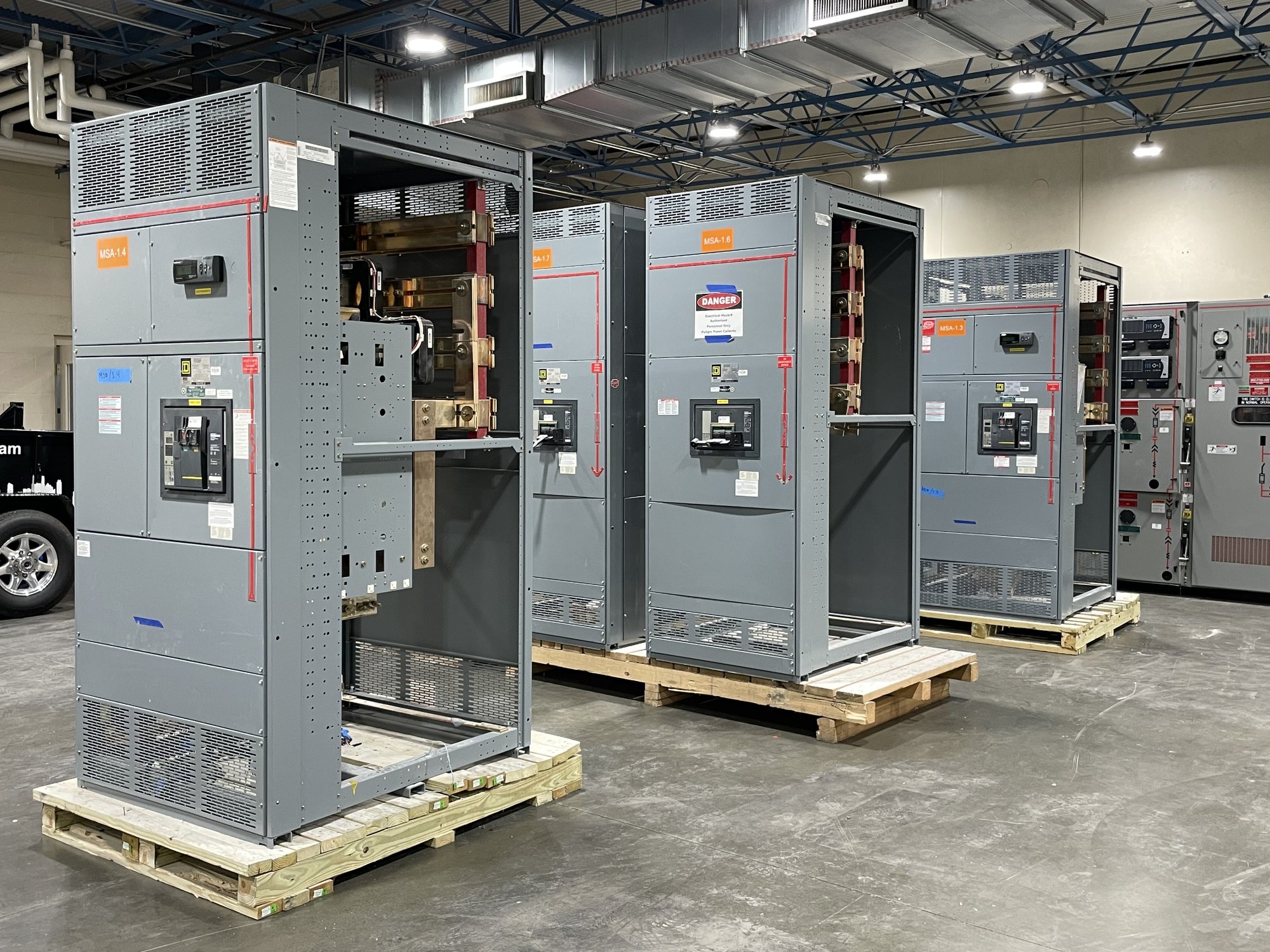
A practical way to sell electrical equipment
Selling electrical distribution equipment identified as 5000 Amp in New York starts with identifying what is available, rather than guessing its value from its age or enclosure size. We are buyers of used, surplus, and decommissioned electrical distribution equipment. We can review an individual item or a defined group of equipment and discuss an offer if the lot is a fit. Tell us its approximate location, condition, and expected release date along with any existing identification.
We buy electrical switchgear from decommissioned data centers and shut-down power plants, along with other surplus distribution equipment. For equipment we agree to buy, we handle and cover the crane, rigging, disconnects, loading, freight, and hauling. You do not need to arrange or perform that physical work: you get paid and our team handles removal and logistics. Qualified personnel follow site isolation and safety rules, and no seller testing is required.
Identify the equipment and the lot
Electrical distribution equipment is not readily identified by cabinet size alone. We consider switchgear, switchboards, motor control centers, panelboards, busway, transfer switches, breakers, and unit substations. Note the manufacturer, model or series, stated voltage and current, and number of sections whenever that information is available. If you have several different items, a brief list by type helps define which equipment is included in the proposed lot.
For a lot described as 5000 Amp, identify whether that amperage appears on the main assembly, an individual breaker, or another component. The main rating and feeder-device ratings need not be the same. Where safe labels or existing schedules are available, note the corresponding manufacturer and model for each rating. A current rating is an identification detail, not proof of operating condition, completeness, or value.
Details that help us review an inquiry
For a first review, describe the equipment type, quantity, manufacturer, and any model and electrical ratings already recorded. Include the pickup location and whether the material is installed, removed, or in storage. Clear exterior photos and accessible nameplates help establish what the lot contains. If an existing asset list, one-line drawing, or section schedule is available, it may help explain a larger or more complex collection.
Describe condition without additional testing
Surplus does not necessarily mean unused, and decommissioned does not by itself establish the condition of an item. Describe the equipment's known history, visible damage, and missing pieces without making assumptions. If earlier inspection or maintenance records exist, you may share them; creating a new report is not required. The seller does not need to test or energize equipment to obtain an initial review.
Keep electrical safety and site control first
Never assume that retired or disconnected-looking equipment is safe to touch. Potential stored energy, unexpected connections, and heavy components require assessment by qualified personnel. We handle disconnection and removal for purchased equipment, with qualified personnel following site procedures for de-energization, isolation, lockout, and verification before handling. Take photographs only from safe, permitted locations; do not open a cabinet or operate a device for the purchase inquiry. No seller testing is required.
How an offer is considered
The proposed lot, not a generic price list, is the basis for a purchase decision. Manufacturer and model, voltage class, ratings, age if known, completeness, condition, and access can all affect review. We consider all voltage classes and both individual items and larger assemblies. Because each situation differs, an offer depends on the information and equipment involved and should be confirmed before anything is scheduled.
We handle rigging and logistics
An accepted purchase includes the crane, rigging, disconnects, loading, freight, and hauling on us. We take care of the work, so the seller does not have to arrange a crew or move the equipment. A useful pickup plan starts with the number and size of pieces, their location, access hours, and known truck or loading restrictions. Tell us if the equipment is still installed or already staged; qualified personnel follow the site's isolation and safety rules.
Cash offer and payment upfront
Our purchase process is based on a cash offer, not a trade-in or a consignment listing. When an offer is accepted, payment is made upfront before pickup, using the payment method agreed by the parties. The written agreement should identify the amount and the items included, along with the collection plan. The equipment must be reviewed before an offer is made, and an inquiry by itself does not guarantee a purchase.
Steps from first message to pickup
To request a review, provide your contact details and a description of the lot, including type, quantity, known ratings, location, and availability. Add exterior and nameplate photos taken from safe locations. We may clarify the scope, condition, or access before presenting an offer. If both parties agree, payment is upfront and we handle the crane, disconnects, rigging, loading, freight, and hauling, coordinating collection with the authorized site contact.
Common questions before you contact us
Can you ask about a mixed lot? Yes. List the different assemblies and loose devices separately so the proposed purchase is understandable. Must every label be readable? No; share what you have and identify any unknowns. Must the seller test the equipment? No. We review all voltage classes, but acceptance and price depend on the specific lot. Access, safe release, and any environmental or special-handling concerns should be discussed before finalizing terms.